
I remember staring at an empty “Portfolio” tab on my Behance profile for almost a week. No clients yet, no paid work to show, and every guide I read online just said “showcase your best work” like I was supposed to pull samples out of thin air.
Turns out, that’s exactly what you do. You make the work yourself, before anyone pays you for it. Once I figured that out, everything moved faster. This is the exact process I used to build a freelance portfolio with zero clients, back when I had no real proof I could do the job and no idea where to even start.
If you’re in that exact spot right now, staring at a blank profile and wondering how anyone builds a freelance portfolio without experience, you’re not stuck. You just need a slightly different approach than the generic “showcase your work” advice everyone repeats without explaining how.
Table of Contents
- Why a Portfolio Matters More Than a Resume
- Step 1: Pick 3 Projects You Can Actually Finish
- Step 2: Make Fake Client Work Look Real
- Step 3: Where to Actually Host It (For Free)
- Step 4: Writing Descriptions That Don’t Sound Made Up
- Step 5: Get Feedback Before Clients See It
- Mistakes I Made With My First Portfolio
- Final Thoughts
- FAQs
Why a Portfolio Matters More Than a Resume
When I started freelancing, I kept trying to compensate for zero experience with a longer bio. More adjectives, more claims about being “detail oriented” and “passionate.” None of it worked.
Clients don’t hire adjectives. They hire proof. A portfolio is the fastest way to answer the one question every client actually has: can this person do the specific thing I need done. Not “are they nice,” not “do they seem hardworking.” Can they do the thing.
Once I swapped my energy from writing a better bio to building three solid sample pieces, my reply rate on Upwork and Fiverr changed within about two weeks. Same skill level, same pricing, just actual proof sitting where clients could see it.
This is really the whole secret behind a strong freelance portfolio: it removes risk for the client. They’re not gambling on your word anymore, they’re looking at something concrete and deciding if that specific style or skill matches what they need.
Step 1: Pick 3 Projects You Can Actually Finish
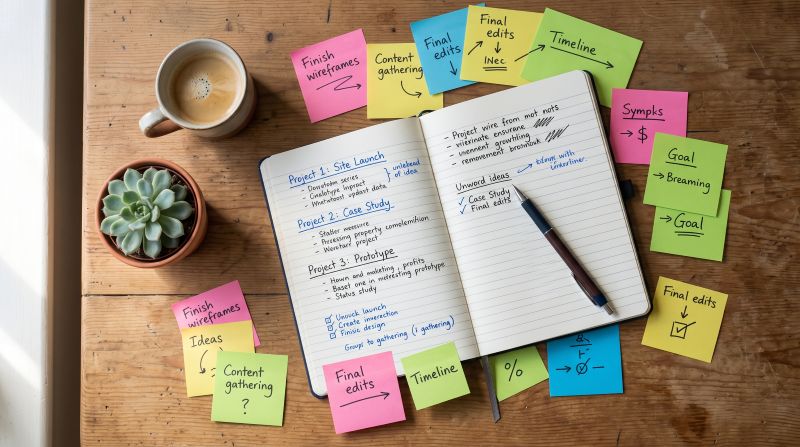
The instinct is to make ten different samples covering every possible service you offer. Don’t. I tried that and burned out before finishing a single one properly.
Pick three. That’s it. Three pieces, done well, beat ten pieces that are half-finished or generic.
Here’s how I picked mine when I was doing freelance writing:
- One piece in the format I most wanted to get hired for (for me, that was product descriptions)
- One piece that shows range, a slightly different format or tone (a blog-style post)
- One piece that solves an obvious, common problem in my niche (a “before and after” rewrite of bad copy)
If you’re a designer, this might be a logo concept, a social media template pack, and a landing page mockup. If you do virtual assistant or data entry style work, a mock inbox cleanup, a sample scheduling system in Notion, and a simple SOP document work just as well, and if that path interests you more broadly, here’s where to actually find legit data entry jobs from home. Same portfolio-building idea either way, just different tools.
The goal isn’t variety for its own sake. It’s picking three things that map directly onto the kind of client you actually want to attract.
Step 2: Make Fake Client Work Look Real
This part felt strange the first time I did it. I made up a fictional skincare brand and wrote full product descriptions for it, like I was actually hired. No one asked me to. I just did it so I’d have something concrete to show.
A few things made the difference between this looking like a real sample versus an obvious practice exercise:
Pick a real-feeling brand, not a placeholder. Instead of “Company XYZ,” I gave my fake brand an actual name, a short backstory, and a target audience. It only took ten minutes but made the whole sample feel intentional instead of thrown together.
Constrain yourself like a real client would. Real briefs have limits, word counts, a specific tone, a call to action requirement. I gave myself the same limits I’d expect from an actual client instead of writing whatever felt easiest.
Design it properly, even if it’s “just practice.” For visual work, I used Canva to actually mock up how the content would look in context, a product page layout, an Instagram post template, not just a plain text document. Context sells the work.
One trick that helped a lot: I picked real brands I liked (without using their actual logos or claiming affiliation) and wrote a “reimagined” version of their content. It gave me a built-in audience reference and made the work instantly more relatable to anyone reviewing it.
Step 3: Where to Actually Host It (For Free)
You do not need a custom website on day one. I wasted actual weeks thinking I needed a fancy personal domain before I could apply anywhere.
Here’s what I actually used, in order, as things grew:
| Platform | Best For | Cost | My Take |
|---|---|---|---|
| Behance | Design, visual work | Free | Clean presentation, good for design and creative niches specifically |
| Contra | General freelancers, no commission | Free | Doubles as a mini portfolio and profile, good all-rounder for beginners |
| Google Docs / Canva PDF | Quick, zero setup | Free | What I used for my very first samples, just a clean shareable link |
| Carrd | A simple one-page personal site | Free or $19/year for custom domain | What I moved to after landing a few clients, still simple, looks more established |
| Dribbble | UI/UX and graphic design specifically | Free tier available | More competitive to get noticed on, but good once you have polished visual work |
My honest advice, start with a Canva-designed PDF or a free Behance profile. Don’t spend a weekend picking a website builder before you’ve even sent your first proposal.
Step 4: Writing Descriptions That Don’t Sound Made Up
Every sample needs a short write-up next to it, and this is where a lot of portfolios fall apart. People either write nothing, or they write something that obviously reads like “this is fake practice work.”
Here’s roughly the structure I use for each sample:
- One line on the fictional or real scenario, framed like a real brief
- One line on the specific challenge or goal (increase conversions, simplify a confusing process, match a specific tone)
- One line on the approach you took and why
Something like: “A skincare brand needed product descriptions that felt premium without sounding overly formal. I focused each description on one specific ingredient benefit instead of generic claims like ‘luxurious’ or ‘radiant,’ since specific claims build more trust with skincare buyers.”
Notice there’s no mention of it being unpaid practice work. You don’t need to announce that. Let the work speak, and if a client asks directly during a conversation, just be honest that it was a self-directed sample project, most clients respect the initiative.
Get Feedback Before Clients See It
I almost skipped this step out of impatience, and it was a mistake. My first version of a “professional bio” line had a typo I didn’t catch for three weeks. Nobody told me because nobody was looking at it critically except me.
A few free ways to get real feedback:
- Reddit communities like r/freelance or niche-specific subs, people are often blunt but genuinely helpful
- Discord servers for your specific skill, freelance writing and design communities are especially active
- A friend outside your industry, if they can’t understand what you do from your portfolio in under a minute, it’s not clear enough yet
Ask specifically, “would you hire me based on this,” not just “does this look okay.” Vague questions get vague answers.
Mistakes I Made With My First Portfolio
- Making ten mediocre samples instead of three strong ones, spreading myself too thin
- Never updating it after landing real clients, my strongest actual work stayed hidden for months
- Writing generic descriptions like “worked on this project” with zero context on the goal or result
- Ignoring mobile formatting, more than half my profile views were from phones and my PDF samples were unreadable on small screens
- Being embarrassed to include practice work, when in reality most clients never asked if it was paid
Final Thoughts
Nobody starts with a portfolio full of paid client work. Every freelancer you admire had an empty portfolio page at some point too, they just didn’t wait around for permission to fill it.
Pick three projects. Make them look real. Put them somewhere simple and free. That’s genuinely the whole first version. You can rebuild it later once you have actual client work worth showing, but that first version is what gets you the client work in the first place.
If you haven’t picked your freelancing niche yet, that’s worth locking down first, here’s the full walkthrough on starting freelancing without experience, portfolio building gets a lot easier once you know exactly what you’re building samples for.
FAQs
Do I really need a portfolio before applying to any jobs?
Yes, even a small one. Two or three solid samples make a huge difference in reply rates compared to applying with nothing but a bio. Clients want to see proof, not just a description of your skills.
Is it okay to use fake or self-assigned projects in a portfolio?
Completely okay, and extremely common. What matters is the quality and relevance of the work, not whether a real client originally paid for it. Just make sure it’s clearly your own original work.
How many samples should a beginner portfolio have?
Three well-made samples are usually enough to start. It’s better to have three pieces that clearly show your best work than ten rushed ones that dilute the overall impression.
Do I need a personal website, or is a free platform enough?
A free platform like Behance, Contra, or even a simple Canva-designed PDF is more than enough when you’re starting out. A personal website becomes more useful once you have consistent client work and want a more polished, branded presence.
Should I mention that a sample wasn’t paid client work?
You don’t need to bring it up proactively. Let the work speak for itself. If a client asks directly, be honest and explain it was a self-directed sample project, most clients respect that kind of initiative.
How often should I update my portfolio?
Every time you finish a piece of real client work you’re proud of, swap it in for one of your original self-made samples. Within a few months, your portfolio should be almost entirely real work.
What if my niche doesn’t have obvious visual samples, like virtual assistant work?
You can still show process. A mock inbox management system, a sample project tracker in Notion or Trello, or a simple standard operating procedure document all demonstrate your organizational skills just as effectively as a visual portfolio piece.